

Turkish Music
Folk Music / Local Music
This music bears the signs of local cultures and the names of their creators are usually indefinite.
The folk music of our country has a structure that was formed by collecting the specific cultural values of all civilizations that have been living in Anatolia and Turkish Thrace since the old times of history and incorporating cultural differences of the regions and thus, that is rare throughout the whole world with its prosperity and diversity. Although our folk music has much diversity and difference with respect to regional characteristics, it can be reviewed under the below 6 regions in a general classification:
Istanbul and Turkish Thrace, Aegean, Middle Anatolia, South-East Anatolia, Eastern Anatolia, Black Sea.
On the other hand, it should be kept into mind that substantial differences may exist between some cities, centers or districts located within the same region
Ottoman Artistic Music
This type of music, today mostly called as "Classical Turkish Music" or "Turkish Artistic Music" prospered, ripened, improved its form/esthetics and gained the identity of an artistic music in parallel with the establishment, growth and strengthening of the Ottoman State. This music gave products on many themes such as religion, love, military and war and each of these formed their respective types, forms and groups. Ottoman Artistic Music was influenced by the music cultures of new countries that joined the empire and it received and gave out elements. However, starting from the early 19th century when the empire started to retrograde and collapse, a gradual loss in depth and loosening is observed in this artistic music as well. While diverse airs and measures were used previously, this understanding was gradually abandoned and it became the entertainment music of the city. "Şarkı" type substituted almost all types in this development that lasted up to now and became more popular as it was spread.
Whereas writing notes was not attached much attention until mid-19th century, many works within this scope were forgotten and diminished. The number of works that could survive to date by being written during any period is around 8000, of which approximately 3000 are those composed from 15th century until the end of 18th century and approximately 5000 are those produced in 19th century. Some more works produced in the first quarter of 20th century can be added to these works, which dated back to very old times with respect to airs, rhythms, forms and playing instruments and methods and were formed within the framework of some specific rules. The music that has been continued to be produced under the title of "Turkish Artistic Music or Classical Turkish Music" to date and gradually transformed into popular forms can be considered to be an extension of Ottoman music that transformed into today's norms.
Ottoman Artistic Music is a synthesis. It bears many riches of the history. It was shared and formed together with minorities living with Turks, such as Byzantines, Turkish Greeks, Iranians, Arabs, Jews and Armenians and it reached its most brilliant era in Enderun, Ottoman Palace school. No country using this system could reach the artistic level reached by the Ottomans.
Ottoman Artistic Music was formed and performed within a "Fasıl" order based on the principle of "unity of air".
Fasıl: It is the concert consisting of pieces composed in the same air by being arranged in a certain order. In a full Fasıl, there are both verbal and instrumental pieces. While forming a Fasıl, it is basic that the pieces be of the same air and they are arranged in a certain order according to their types and forms. In general, two "Beste"s and two "Semaî"s have to be composed to form a fasıl of an air. These are verbal pieces. The "beste"s are in the forms of "Murabba" or "Nakış". "Murabba"s composed on two couplets of a "Gazel" can be with or without "Terennüm"s. Melodies formed with meaningless words such as "ten, tenen, tenenen, ten nen ni", etc. or meaningful words such as "canım, ömrüm" (my dear, my life), etc. in accordance with the measure besides the lines of the poem forming the lyrics of the piece are called "Terennüm". 1st, 2nd and 4th lines of the poem are related to the same melody. The melody of the 3rd line is different and in this section called "Miyan Hâne", air passages or extensions are often made. Terennüm comes after each line in Murabba's with Terennüm. The Terennüm of Miyan Hâne can be different. In Nakış's, on the other hand, two lines are composed in connection with each other and then a long Terennüm comes.
The first of verbal Semaî's, which are in the same form with Murabba or Nakış but composed in "Semaî measure", is "Ağır Semaî" (slow) and the second is "Yürük Semaî" (vivid). In a Fasıl, verbal pieces such as "Kâr" and "Şarkı", and instrumental pieces such as "Taksim", "Peşrev", "Saz Semaîsi" (instrumental semaî) and "Oyun Havası" (belly-dance air) can be added to these. Thus, the structure of a full fasıl is formed as:
a) Prelude Taksim played by any instrument, b) Peşrev, c) First Beste or Kâr, d) Second Beste, e) Ağır Semaî, f) Şarkı's (sequenced from those with large measures and grave character to those with small measure and vivid character), g) Yürük Semaî, h) Saz Semaîsi.
"Kâr" is a type of verbal piece largely using the "Terennüm" element and requiring great mastery, and is one of the most sophisticated forms. "Şarkı" is a form that emerged in our literature with the influence of folk songs. Şarkı's consist of lines and have different names according to the number of lines. They are composed in small measures and can have very different structures. They drew great interest particularly after 19th century and overshadowed the other forms of verbal pieces. In 20th century, they became further eminent, went beyond accustomed structures, transformed into the type of "Fantasy" and gradually became more popular, and except very few successful examples, they led to the loss of depth in traditional artistic music to some extent.
The primary instrumental piece forms used in Ottoman Artistic Music are:
Peşrev: It is a form of instrumental piece generally composed with large measures such as "Darb-ı Fetih", "Sakîl", "Muhammes" and "Devr-i Kebir" and sometimes with "Düyek" measure, incorporating different melodies and consisting of sections called "Hane" and a section called "Mülâzime", repeated between them without much change.
Saz Semaisi: Despite having the same structure with Peşrev's, these are instrumental pieces composed with the measures of "Semaî" (6 cycles), "Aksak Semaî" (10 cycles) and "Yürük Semaî" (6 cycles) and are called "Saz Semaîsi" (Instrumental Semaî). They are performed at the end of the fasıl, following "Yürük Semaî".
Taksim: These are melodies performed freely and spontaneously by a single instrument within the air, but without depending on a measure, in order to present the air, lead, warm up or pass to another air.
Oyun havası: These are instrumental pieces composed for dancing.
Measures: Measures up to 15 cycles are called "Small measures" and larger than 15 cycles are called "Large measures". The use of two large measures together is called "Darbeyn". There are also measure series formed by the following of several measures of each other. One of these is "Zencîr" measure consisting of five measures and has 60 cycles according to one view and 120 according to another. Within small measures, those with 5, 7, 9, etc. cycles or measures with 10 cycles such as "Aksak Semaî" are classified under "Aksak measures". The real measure called "Aksak" is that sequenced as 2+2+2+3.
Ottoman Music - Samples
Ottoman Music - Modern Samples
Mehter (Janissary) Music
Mehter is the indication of grandeur, splendor and magnificence in Turkish tradition; it is not a means of gaiety. The sublimity and celebrity of the State echoes with the boom of drums. Concepts of the unity of people and the loftiness of the state are very important in the state understanding of the Turks. Such beliefs and traditions existed also in the Turkish states before Islam and Seljuk and Ottoman states with minor variations.
There are three important symbols in this structure:
Otağ (large tent) is the place where the khan or the commander in chief resides. This occurs as a sign of war, because the otağ is established during only wartime. Hakanın Kösü (Khan's Large Drum) is located in front of the khan's tent and belongs only to the khan. Hakanlık Mehteri (Khan's Band) is the musical band playing under the flag and in front of khan's tent in order to encourage the soldiers.
The flag and the Janissary band are very important inseparable phenomena in the Turkish state. The otağ was left upon the beat of the Janissary band and the initial steps of war raids were thus taken. In the Central Asia traditions of the Turks, the ceremony of beating the Large Drum placed in front of the tent of Khan, who was the head of the state, at certain times of the day and showing his power was called as beating or knocking Nevbet (Nevbe).
Beating Nevbet was interpreted as the Khan's showing his power to the friends and enemies and particularly frightening the enemies. The Janissary band, which was maintained as a sacred asset like the flag in the Ottomans, besides being an important indicator of independence and state's existence, used to stimulate and excite the feelings, encourage the troops and moralize the army with the epic airs that it played and demoralize and defeat the enemy with the great boom that is caused in field battles, fortress besieges and sea battles during the attack launched against the enemy. In field battles, one single khan's large drum was a band on its own. The khan's large drum used to determine attacks and pauses and the Janissary band consisting of drums and pipes used to direct the army in war. Defeat in war was admitted upon the plunder of the Janissary band. Therefore, the most severe battles were around the flag and the Janissary band.
It is clear that the Janissary band was in some sense away from being merely a music group in the battlefield and its musical aspect was more evident during peacetime. During peacetime, the Janissary band was an indication that the khan's sultanate and the state life continued. Moreover, the drum and the band also used to perform information and announcement works of the state.
The Ottoman Janissary band consisted of aerophones such as shrill pipe, pipe, kurrenay and band whistle, and membraphones or patting instruments such as large drum, drum, timbale, cymbal and stick. The number of instruments was kept equal and the factor of the band was determined on the basis of such number. The Sultan's Janissary band, which was called "Tabl ü alem-i hassa" and was the greatest, had nine factors. This meant that there was nine from each instrument. This number later increased up to twelve, even sixteen. Besides the Sultan, the Prime Minister, Members of the cabinet and the Minister of Finance and Foreign Affairs also had Janissary bands and Janissary bands used to work in various counties and fortresses of the country.
The influential power of the Janissary band was also assessed by the Europeans and Military Music groups, "Bands" were established in various European countries by taking the Janissary band as an example.
Mehter (Janissary) Music - Samples
Religious Music
The music used in obligations, Sunna and excess worship, call to worship, assistance or decoration under the requirements of the Islam religion and called as "Şer'i (Canonical) Music" and "Tasavvufî (Mystic) Music" according to the manner of utilization and as "Mosque Music" and "Convent Music" according to the place of performance can be handled under the general title of "Religious Music". Forms with an important place in Islam worship such as "Tilâvet" (Koran reading), "Ezan" (call for prayer), "Salevât", "Temcîd", etc. are included in "Mosque Music". The music performed by various mystic paths, particularly Mevlevî's and Bektâşî's, in their ceremonies including also some kind of religious dance, "Mevlevî Âyin"s (rites) and Bektâşî "Deyiî "Deyiş"s and "Semah"s are classified in the "Mystic Music".
Mevlevi Music
Hymns
Folk Music Samples
Aegean
Eastern Anatolia
Dersim 4 Dağ İçinde Performer: Arif Sağ Lyrics: Anonymous Composition: Anonymous
Haydar Performer: Ali Ekber Çiçek
Istanbul and Turkish Thrace
Çavuş
Telgrafin Telleri
Şu Gelen Atlı mıdır
Kırmızı Gülün Adı Var
Alişim'in Kaşları Kara
Gel Ey Denizin Nazlı Kızı
Helvacı
Anam Olasın Ömer
Sigaranın Dumanı
Bakmıyor Çeşmi Siyah
Karşıyakalı
Bağlamamın Düğümü
Kalamış
Aziz İstanbul
Çıkar Yücelerden
Çiftetelli
Bre Sarika
Ben Seni Severim
Üsküdar'a Gideriken
Vardar Ovası
Yağmur Yağdı
Mastika
Karakız
Daktilo
Rampa
Hayat Gülerken Ağlatır
Özleyiş
Mazi (İlk Türk Tangosu)
Emelim
Sana Nerden Gonul Verdim
Papatya
İstemem Babacığım
Minos
Bune Seyi Ah
Alaturkani
Geceleyin Gitmek İstiyorum
Mangiko
Terace
İstanbul Kasap Havası
Kasap Havası
Arap Oyun Havaları
Mecnunum Leylamı Gördüm
Çiftetelli
Middle Anatolia
Kalktı Göç Eyledi Performer: Muharrem Ertaş Lyrics: Dadaloğlu Composer: M. Ertaş
Ela Gözünü Sevdiğim Performer: Muharrem Ertaş Lyrics: Karacoğlan Composer: M. Ertaş
Gönül Ne Gezersin Performer: Muharrem Ertaş Lyrics: Karacoğlan Composer: M. Ertaş
Zülif Dökülmüş Yüze Performer: Neşet Ertaş Lyrics: Neşet Ertaş Composer: Neşet Ertaş
Gel Yanıma Performer: Neşet Ertaş Lyrics: Neşet Ertaş Composer: Neşet Ertaş
Tatlı Dile Güler Yüze Performer: Neşet Ertaş Lyrics: Neşet Ertaş Composer: Neşet Ertaş
Allı Turnam Performer: Hacı Taşan Lyrics: Anonim Composer: Anonim
Bugün Ayın Işığı Performer: Hacı Taşan Lyrics: Anonim Composer: Anonim
Çavuş Performer: Hacı Taşan Lyrics: Anonim Composer: Anonim
Kızılırmak Performer: Çekiç Ali Lyrics: Âşık Said Composer: Çekiç Ali
Süpürgesi Yoncadan Performer: Çekiç Ali Lyrics: Anonim Composer: Anonim
Uzun İnce Bir Yoldayım Performer: Aşık Veysel
Mecnunum Leylamı Gördün Performer: Aşık Veysel
Güzelliğin On Para Etmez Performer: Aşık Veysel
Evlerinin Önü Mersin Performer: Süleyman Demiralay
Mühür Gözlüm Performer: A.Ali İzzet Özkan
Mecnunum Leylamı Gördün Performer: A.Ali İzzet Özkan
Şu Sazına Bir Düzen Ver Performer: A.Ali İzzet Özkan
Türkmen Kızı Bar Oynuyor Performer: A.Ali İzzet Özkan
Kula Kulluk Yakışır Mı? Performer: Arif Sağ Lyrics: Muhlis Akarsu Composer: Muhlis Akarsu
Bülbül Ne Ötersin Performer: Arif Sağ Lyrics: Pir Sultan Abdal Composer: Anonim
South-East Anatolia
Ottoman Artistic Music Samples
Ottoman Music - Samples
Arazbar Peşrev Performer: Nefiri Behram
Çeng Taksimi
Çargah Peşrev Performer: Derviş Mustafa
Kanun Taksimi
Ferahnaz Taksimi Performer: Tanburi Cemil Bey
Yegah'ta Rast'tan Irak'ta Segah'a Taksim Performer: Cüneyd Orhon
Segah Saz Semaisi Performer: Cüneyd Orhon
Rast Taksim
Selmek Taksim Performer: Yorgo Bacanos
Nikriz Sirto Performer: Yorgo Bacanos Musicians: Yorgo Bacanos, Sadi Işılay(Keman), Fahire Fersan(Kemençe), Ercüment Batanay(Tanbur), Şükrü Tunar(Klarnet), Fevzi Aslangil(Piyano)
Neva Kar Performer: Münir Nureddin Selcuk Lyrics: Şirazlı Hafız Composer: Buhurizade Mustafa Itri Efendi
Şehnaz İlahi Performer: Münir Nureddin Selçuk Composer: Hamamizade İsmail Dede Efendi
Nar-ı Nicrane Düşüp Performer: Hafız Sadettin Kaynak
Saba Taksim Performer: Neyzen Tevfik
Suzinak Taksim Performer: Neyzen Tevfik
Makber Performer: Hafız Burhan
Asuman Ağlar Performer: Hafız Kemal
Şimşir-i Nigâhın Performer: Hafız Kemal
Nihavend Taksim Performer: Şükrü Tunar
Hicaz Raks Performer: Şükrü Tunar
Kürdilihicazkar Longa Performer: Şükrü Tunar
Hicaz Peşrevi Performer: Salim Bey
Seni Sevda Çiçeğim Performer: Mısırlı İbrahim Bey
Yıllar Ne Çabuk Geçti Performer: Bimen Şen
Solsan da Sararsan Performer: Mısırlı İbrahim Bey
Şu Karşıki Dağda Performer: Dede Efendi
Kimseye Etmem Şikayet Performer: Kemani Serkis Efendi
Gel Güzelim Çamlıca'ya Performer: Faiz Kapancı
Nihavend Longa
Ey Gonca-ı Nazik Tenim Performer: Münip Utandı
Körfezdeki Dalgın Suya Performer: Münip Utandı
Kalamış Performer: Münip Utandı
Yıllar Ne Çabuk Geçti Performer: Münip Utandı
Dün Gece Ye's ile Kendimden Geçtim Performer: Münip Utandı
Isfahan Şarkı Performers: Choir Lyrics: Ahmet Rıfat Bey Composer: Haşim Bey
Rast Şarkı - Ağıraksak Performer: Ahmet Özhan Composer: Tatyos Efendi
Nihavend Şarkı Performer: Koro Composer: Muallim İsmail Hakkı Bey
Kürdilihicazkar Şarkı Performer: Recep Birgit Lyrics: Hacı Arif Bey Composer: Hacı Arif Bey
Yegah Şarkı Performers: Choir Lyrics: Nedim Composer: Dr. Suphi Ezgi
Dügah Şarkı Performer: Choir
Ottoman Music - Modern Samples
Mehter (Janissary) Music - Samples
Get Mehter CD
FOLK INSTRUMENTS
Turkish musical folk instruments can be classified as follows:
1- String Instruments a) Played with a plectrum
b) Played with fingers
(much like an acoustic guitar, but with a different sound)
Bağlama Tar
2- Bow Instruments
Kabak Kemane Karadeniz Kemençesi
3- Wind Instruments
Zurna Kaval Çığırtma Mey Tulum Sipsi Çifte
4- Percussion
Davul Nağara Tef Kaşık
You can also listen sound samples of the instruments.
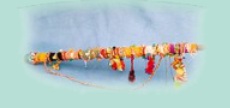
Top picture: Fethiye - Muğla, String instruments belonging to Ramazan Günger Bottom picture: Folk Instrument from Ankara - a reed pipe named "Kılıflı Dilsiz Hortlatma kavalı"
The Folk Instruments and Turkish Music Samples has been obtained from Turkish Ministry of Culture http://www.kultur.gov.tr. Thanks for supporting...